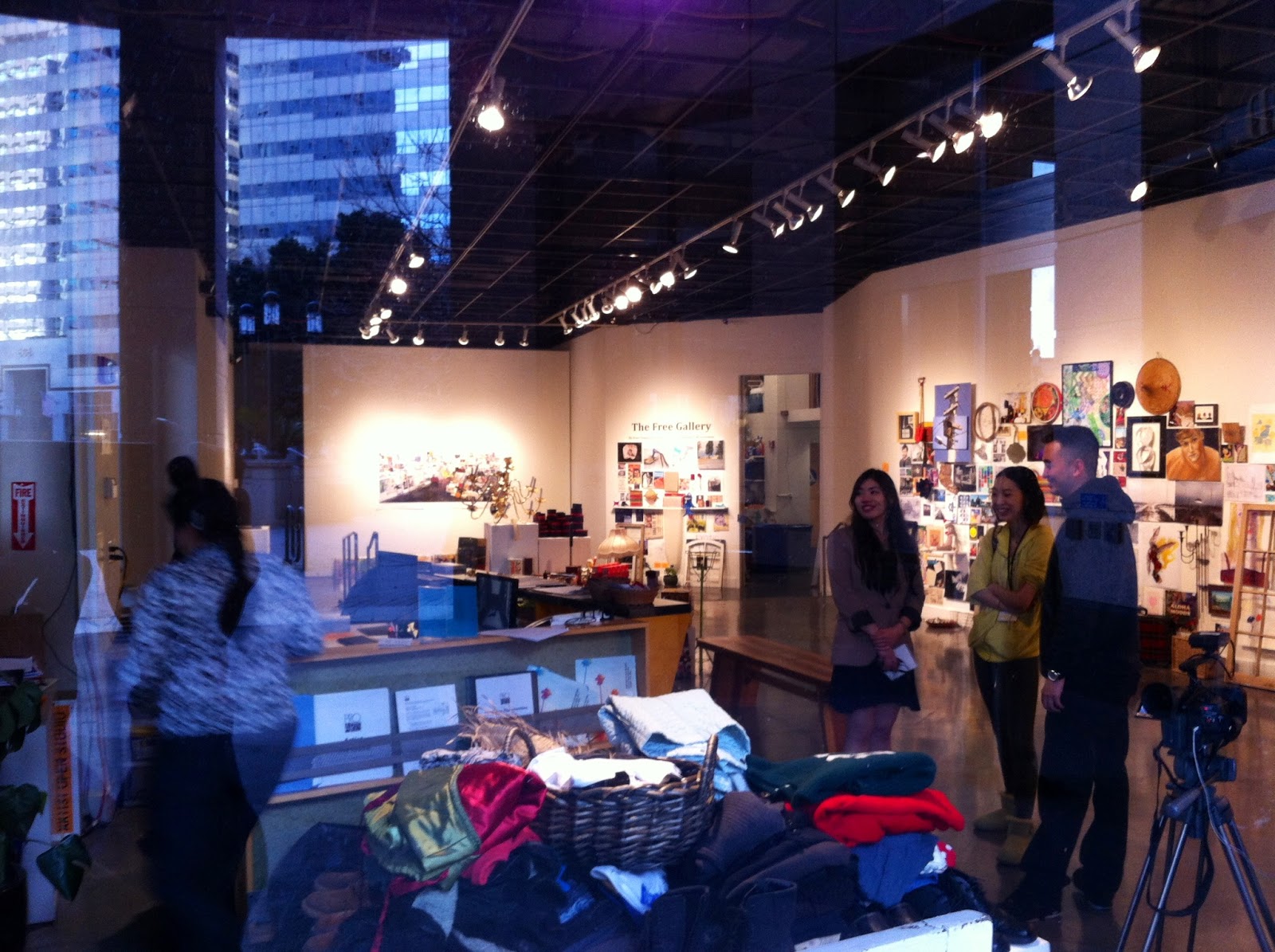
Friday, November 07, 2014
Monday, November 03, 2014
Dragoman
dragoman
PRONUNCIATION:
MEANING:
noun: An interpreter or guide.
ETYMOLOGY:
From French dragoman, from Italian dragomanno, from Latin/Greek dragoumanos, from Arabic tarjuman, and Aramaic, from Akkadian targumanu (interpreter). Earliest documented use: 1300s. Akkadian is a now-extinct Semitic language once spoken in ancient Mesopotamia (now Iraq) and written in cuneiform. Earliest documented use: 14th century.
USAGE:
"The pig doesn't express himself in some exotic swine-dialect, the farmer has no need to summon a dragoman fluent in grunts, each understands the other perfectly."
Eric Ormsby; Ambitious Diminutives; Parnassus: Poetry in Review; 2008.
See more usage examples of dragoman in Vocabulary.com's dictionary.
Eric Ormsby; Ambitious Diminutives; Parnassus: Poetry in Review; 2008.
See more usage examples of dragoman in Vocabulary.com's dictionary.
http://wordsmith.org/words/dragoman.html
Wednesday, October 29, 2014
Book suggestions from Dave Monroe
The Haunted Screen - Lotte H. Eisner - Paperback - University of California Press
The golden age of German cinema began at the end of the First World War and ended shortly after the coming of sound. From The Cabinet of Dr. Caligari onwards the principal films of this period were characterized by two influences: literary Expressionism and the innovations of the theater directors of this period, in particular Max Reinhardt. This book demonstrates the connection between German Romanticism and the cinema through Expressionist writings.

https://www.goodreads.com/book/show/1099199.Reenchanted_Science
Reenchanted Science: Holism in German Culture from Wilhelm II to Hitler
By the 1920s in Central Europe, it had become a truism among intellectuals that natural science had "disenchanted" the world, and in particular had reduced humans to mere mechanisms, devoid of higher purpose. But could a new science of "wholeness" heal what the old science of the "machine" had wrought? Some contemporary scientists thought it could. These years saw the spread of a new, "holistic" science designed to nourish the heart as well as the head, to "reenchant" even as it explained. Critics since have linked this holism to a German irrationalism that is supposed to have paved the way to Nazism. In a penetrating analysis of this science, Anne Harrington shows that in fact the story of holism in Germany is a politically heterogeneous story with multiple endings. Its alliances with Nazism were not inevitable, but resulted from reorganizational processes that ultimately brought commitments to wholeness and race, healing and death into a common framework.Before 1933, holistic science was a uniquely authoritative voice in cultural debates on the costs of modernization. It attracted not only scientists with Nazi sympathies but also moderates and leftists, some of whom left enduring humanistic legacies. Neither a "reduction" of science to its politics, nor a vision in which the sociocultural environment is a backdrop to the "internal" work of science, this story instead emphasizes how metaphor and imagery allow science to engage "real" phenomena of the laboratory in ways that are richly generative of human meanings and porous to the social and political imperatives of the hour.(less)
Paperback, 336 pages
Published January 31st 1999 by Princeton University Press (first published July 22nd 1996)
original title
Reenchanted Science
ISBN
0691050503 (ISBN13: 9780691050508)
Wednesday, January 22, 2014
My New Olive-drab Corduroy Jeans
Alice bought me a new pair of corduroy jeans. I like everything about them - the fit, the feel, the details. The olive drab color complements some other recent wardrobe additions and gives me a nice self-esteem boost, reminding me how far I have come since the bitter day when I vowed I’d never again let that Army color touch my skin.
Yes, I am letting that color touch my skin. We finished our business four decades ago, the Army and me; I made it free without shooting anybody, thank goodness. Militaristic taint or no, I am enjoying these sharp new corduroys.
Corduroy. Beautiful word. Strange amalgam of consonants C, D, and R. Those Os. That ambiguous Y. So what if “heart of a king” - coeur du roy - turns out to be just my garbled version of the folk etymology; it tells a truth.
I will always remember the corduroy roads of my youth, me along for the ride on holiday from school as salesman Dad drove us bumping over the logs deep into the swamps of south Louisiana, on a mission to change the way they drill oil wells with new tools based on revolutionary technology, one rig, one skeptical drilling engineer at a time.
Our family had been in oil-- the greasy, blue-collar bottom, not the big-money top, not even Dad’s sales success could lift us that high -- since my paternal grandfather and his brothers had worked together as a drilling crew in the oil fields of Pennsylvania early in the 20th century. When black gold gushed in Kansas the band of brothers followed the work west. On the other side of the family my maternal grandfather - I carry his name - helped drill the first successful oil well in Western Colorado. I represented my generation in the “oil patch.” On my first paid job at age twelve, I scrubbed and painted drill-collar thread protectors in the Lafayette, Louisiana tool yard of the company that employed my father. Seven years later I was cooking breakfast and cleaning up after forty roughnecks and roustabouts, as Galley Hand on Chevron Mobile Rig No. 9, a drilling platform one hundred twenty miles out in the Gulf of Mexico, a two-hour flight from Houma on the Louisiana coast.
I might as well have oil instead of blood pulsing through my body. That’s why, when the 2010 British-Petroleum oil spill poisoned the Gulf of Mexico, I felt personally responsible. But, I managed to get over that; everybody’s trashing Mother Earth.
I like the feel of these cords under my fingers, rough like those corduroy roads. And I like the way these hiphuggers snuggle my butt, how they tuck up around the adult diaper and hold it firmly in place. Whether I like it or not, the diaper helps me remember that my desire won't stop the mess out there any more than it will in here, up close and personal. But, I can still dress it up sharp and do it in style, in my new olive-drab corduroy jeans.
--Doug Millison, 22 January 2014
Alice bought me a new pair of corduroy jeans. I like everything about them - the fit, the feel, the details. The olive drab color complements some other recent wardrobe additions and gives me a nice self-esteem boost, reminding me how far I have come since the bitter day when I vowed I’d never again let that Army color touch my skin.
Yes, I am letting that color touch my skin. We finished our business four decades ago, the Army and me; I made it free without shooting anybody, thank goodness. Militaristic taint or no, I am enjoying these sharp new corduroys.
Corduroy. Beautiful word. Strange amalgam of consonants C, D, and R. Those Os. That ambiguous Y. So what if “heart of a king” - coeur du roy - turns out to be just my garbled version of the folk etymology; it tells a truth.
I will always remember the corduroy roads of my youth, me along for the ride on holiday from school as salesman Dad drove us bumping over the logs deep into the swamps of south Louisiana, on a mission to change the way they drill oil wells with new tools based on revolutionary technology, one rig, one skeptical drilling engineer at a time.
Our family had been in oil-- the greasy, blue-collar bottom, not the big-money top, not even Dad’s sales success could lift us that high -- since my paternal grandfather and his brothers had worked together as a drilling crew in the oil fields of Pennsylvania early in the 20th century. When black gold gushed in Kansas the band of brothers followed the work west. On the other side of the family my maternal grandfather - I carry his name - helped drill the first successful oil well in Western Colorado. I represented my generation in the “oil patch.” On my first paid job at age twelve, I scrubbed and painted drill-collar thread protectors in the Lafayette, Louisiana tool yard of the company that employed my father. Seven years later I was cooking breakfast and cleaning up after forty roughnecks and roustabouts, as Galley Hand on Chevron Mobile Rig No. 9, a drilling platform one hundred twenty miles out in the Gulf of Mexico, a two-hour flight from Houma on the Louisiana coast.
I might as well have oil instead of blood pulsing through my body. That’s why, when the 2010 British-Petroleum oil spill poisoned the Gulf of Mexico, I felt personally responsible. But, I managed to get over that; everybody’s trashing Mother Earth.
I like the feel of these cords under my fingers, rough like those corduroy roads. And I like the way these hiphuggers snuggle my butt, how they tuck up around the adult diaper and hold it firmly in place. Whether I like it or not, the diaper helps me remember that my desire won't stop the mess out there any more than it will in here, up close and personal. But, I can still dress it up sharp and do it in style, in my new olive-drab corduroy jeans.
--Doug Millison, 22 January 2014
Saturday, October 26, 2013
Sunday, April 07, 2013
Rooftop pigeon breeders
http://www.nytimes.com/2013/04/04/nyregion/breeding-pigeons-on-rooftops-and-blurring-racial-lines.html
Breeding Pigeons on Rooftops, and Crossing Racial Lines
Todd Heisler/The New York Times
Delroy Sampson breeds his own
birds and spends hours each day scraping away droppings, stocking
feeders, hosing down coops, filling water canisters and hauling bags of
feed to the roof.
By JOSEPH BERGER
Published: April 3, 2013
- Google+
- Save
- Share
- Reprints
-
When New Yorkers consider the subculture of people who raise pigeons on
rooftops, many are likely to think of Terry Malloy, the longshoreman in
the 1954 film “On the Waterfront” played by Marlon Brando. He was a
classic rooftop breeder, rough-hewed, working-class and white ethnic to
his toes.
But that image has long needed some alteration because in the dwindling
world of rooftop fliers, as they are known, the men are as likely to be
working-class blacks or Hispanics. Many were introduced to the hobby by
Irish, Italian and other fliers of European descent, an unlikely
camaraderie that evolved in neighborhoods like Bushwick, Canarsie and
Ozone Park that were undergoing gradual racial shifts.
Ike Jones, an African-American who manages one of the last pigeon supply
stores for its Italian-Jewish owner, Joey Scott, said he learned much
of the craft when he was about 12. He then became a helper to George
Coppola, an Italian rooftop breeder in Bedford-Stuyvesant.
“I was amazed at his coop,” said Mr. Jones, now 65. “He had electricity
and running water, and I only had a box made of scrap wood. On Sunday
his wife would cook spaghetti and meatballs and I would eat with them
because I was always there.”
A new book, “The Global Pigeon,” by Colin Jerolmack, an assistant
professor of sociology at New York University who spent three years
hanging out with pigeon fliers, makes the point that pigeon breeding
brought Italian-Americans and other ethnic whites “into contact with
people of a different ethnic and age cohort with whom they were not
voluntarily associating before.”
“African-Americans in Bed-Stuy who mostly hang out with other
African-Americans, because they keep pigeons wind up being friends with
these 85-year-old white guys they would not usually associate with,” Dr.
Jerolmack said in an interview.
Take Delroy Sampson, a brawny 60-year-old electrician who calls himself
Panama after his country of birth. After 50 years of flying pigeons he
still quickens with excitement watching a flock wheel across a blue sky,
then spiral up like a whirlwind, split apart into two and merge once
again, as if they were a corps of ballerinas choreographed by George
Balanchine.
He does much of the choreographing, using a long stick with a Puerto
Rican flag — the Panamanian flag he had used fell apart — to scare them
into the sky, and sounding chirps and whistles to send them higher or
summon them back to the coop.
“They get up there in the clouds — like little dots,” Mr. Sampson said
while standing atop the three-family house he shares with his wife and
two children. “If you look at them, they actually do somersaults.”
“See that!” he added, spotting a somersault. “I love them.”
Mr. Sampson was first seized with a passion for pigeons as a 10-year-old
immigrant when he saw the Walt Disney movie “The Pigeon That Worked a
Miracle.” A few years later, he fell under the influence of Joe LaRocca,
the president of a pigeon racing club. After Mr. Sampson learned the
basics of raising pigeons, Mr. LaRocca and a colleague talked to his
mother about his new hobby.
“They gave her the lesser of two evils,” he said. “I could hang out on
the street and the street would claim me, or I could be hanging out on
the roof with an interest in pigeons.”
A half-century later, Mr. Sampson still breeds his own birds, which come
in myriad varieties and look different from feral pigeons that haunt
the city’s squares and parks. In shops, pigeons typically cost $5 to $40
apiece, though sires of champion racers can cost six figures.
Like most breeders, Mr. Sampson spends hours each day scraping away bird
droppings, hosing down coops, stocking feeders, filling water canisters
and hauling 50-pound bags of feed up a 10-foot ladder and through a
hatch to the roof. He uses a syringe to vaccinate each of his 300 birds
against diseases and keeps a large rooftop medicine chest stocked with
antibiotics, herbs, bath salts, treatments for lice and mites, and even
Vicks Formula 44 for colds.
“I relate to the birds as if they’re like me,” he said. “If I’m sick, they’re sick. If I’m cold, they’re cold.”
He spends so much time on the roof, he has built himself a shack,
outfitted with a heater, a television and a bunk bed for napping. Pigeon
flying is often turned into a competitive game, with rivals sending
their flocks into the sky to mix with other flocks, with the goal of
luring the other pigeons into their own coops. Some breeders also race
pigeons.
One thing all fliers lament is that younger people are not taking up the
hobby. In the 1950s, every other low-rise roof in certain neighborhoods
seemed to have a pigeon coop. But fewer people showed interest in the
sport, and landlords also cracked down because gentrifiers did not like
the pigeon mess. Dr. Jerolmack estimates there are no more than 300
pigeon fliers left in the city.
Pigeons on Broadway, a supply store under the elevated J line in
Bushwick, is among only a small number of pigeon shops left. Mr. Jones,
its manager, compares the atmosphere to a barbershop, where “men come to
get away from their wives and the pressures of the week.” The
camaraderie has often involved vulgar but good-natured taunting about
how many birds a flier caught from another’s flocks. The chatter also
allows for racial taunts, though some remarks bite too hard.
Mr. Sampson, who has 20 other rooftop fliers within a mile of his house, including the former heavyweight champion Mike Tyson,
recalled a hurtful moment in the otherwise accepted teasing when during
one racing competition someone said “the black guy can’t be beating the
white guy — he must be cheating.”
Aaron Marshall was first hooked as a 7-year-old in East Williamsburg
watching Italian, Irish and other white pigeon breeders on their roofs
and beguiled by the competition, with men boasting, “I caught five on
you and he caught five from me.” There and later in Ozone Park, he
learned many of his skills from a white man called Teddy the Greek and a
Dominican named Louie.
They taught him to keep new birds in the coop for four weeks and only
let them out when they are hungry so they will be trained to return. He
learned that pigeons may stray from a flock because they become
confused, feel threatened by a hawk, lose a mate or find the coop
overcrowded. He learned to get rid of birds that frequently pull away
from the flock, because such mavericks will lure birds to other flocks.
The pigeons, he said, taught him empathy.
“You experience what it is to have a living thing,” said Mr. Marshall,
who is now 56 and is a maintenance worker. “It shows you how good you
are at caring for it when it comes back. What good is it for a child to
have a violent video game compared to having a living, breathing, loving
animal that needs your compassion and care? If I hadn’t been on the
roof who knows what kind of trouble I would have gotten into.”
Sunday, March 10, 2013
Little Free Art Gallery on exhibit at "The Free Gallery", Opening Night, 1 March 2013
[All photos by Doug Millison]
"The Free Gallery" is a work of social art, a work of art that borrows the social form of the art gallery and whose major elements include the activity of the people who visit the exhibit and the relationships that they form in the process. "The Free Gallery" proprietor, Jocelyn Meggait of Free Utopian Projects, has built a gallery within the hosting Pro Arts gallery in Oakland, California, and has organized an exhibit of art works and interesting second-hand objects from nearly 70 artists. The public is invited through March 29, visitors can expect to find art works and other treasures and choose one to take away for free.
I donated three new "Single-Serving Size" Little Free Art Gallery works to be exhibited and given away at the show: The Hilary Box, Boss Joss, and Big Joss Man, Can't You Hear Me When I Call? The Little Free Art Gallery project also borrows the social form of the art gallery and incorporates the activity of the people who visit and "enter" the gallery installation, and who take a piece of art from it
The exhibit replicates the social experience of the art gallery. Visitors respond to publicity about "The Free Gallery" in social media, from Pro Arts, and other sources, and come to visit. Admission is free. Instead of selling the works on exhibit, "The Free Gallery" offers its exhibited items for free, one for each visitor who wishes to take one. Meggait interviews each visitor and records the reason given for this particular selection, and photographs the patron with her selection. A basket at the information desk offers offer business cards and flyers from exhibiting artists, as well as "The Free Gallery" post card. A guest book sits ready for visitor comments. New art works are placed in "The Free Gallery" daily throughout the show. On opening night, Meggait said that she expects everything to be taken by visitors by the end of the exhibit period.
In explaining "The Free Gallery", organizer Jocelyn Meggait points to the writings of Nicolas Bourriaud whose book Relational Aesthetics provides a theoretical frame for understanding art works that replicate social forms. (Bourriaud's Postproduction: Culture as Screenplay: How Art Reprograms the World quoted above, is available online as a pdf, search the title at Google.) "The Free Gallery" thus not only presents a well-curated and attractively-designed display of art works and interesting second-hand items, as an art work itself it includes the activity of the visitors who arrive: they view the exhibit, talk with other visitors, select a work, describe why they are taking it, have their photo taken. The social process that unfolds over time in this gallery-within-a-gallery constitutes Meggait's work of social art.
The Little Free Art Gallery works that I donated to "The Free Gallery" are also social art works. Intended as art objects, their exterior and interior surfaces have been decorated the way I create scrapbook collages, with a variety of materials and imagery spanning a spectrum of styles.
Little Free Art Gallery also recreates the art gallery social experience. Visitors are invited to open the door and "enter" the Little Free Art Gallery, view the art work on exhibit within, and to take the Little Free Art Gallery home (in the case of a Single-Serving Size box) or who take a piece of art from it if the Little Free Art Gallery in question is a permanent installation. They are also invited to contact the Little Free Art Gallery blog or Facebook Page, to let the project organizer (me) know the where it ended up, in whatever level of detail the new owner is willing to provide.
One interesting contrast: "The Free Gallery" seems to have been inspired by art school theoretical studies, while Little Free Art Gallery is the result of my search to solve a practical problem – where to find exhibit space for my art, in the absence of relationships with existing art galleries. Creating my own exhibit space for temporary or permanent art installations led me to the discovery that I could use Little Free Art Gallery to recreate the art gallery experience and at the same time undermine or otherwise question the conventions of this social activity. Only later, after encountering the Free: A Utopian Project Page on Facebook, and after I had started designing and writing about the Little Free Art Gallery project, did I read Bourriaud's book and apply his theoretical framework to what I was doing.
Reading Postproduction: Culture as Screenplay: How Art Reprograms the World in recent weeks has opened my eyes to a surprising number of parallels between projects from my career as online journalist and Web editorial consultant/designer and key art historical, critical and theoretical developments from the 1970s to the present. I plan to detail some of these parallels in an article called "Life Imitates Art History" to be published in the near future here, on the Little Free Art Gallery blog, and Facebook Page.
| "The Free Gallery" is an art gallery inside another art gallery, Pro Arts, in downtown Oakland, California. |
The work of art may thus consist of a formal arrangement that generates relationships between people, or be born of a social process; I have described this phenomenon as 'relational aesthetics,' whose main feature is to consider interhuman exchange as an aesthetic object in and of itself.
–Nicolas Bourriaud, Postproduction Culture as Screenplay: How Art Reprograms the World
"The Free Gallery" is a work of social art, a work of art that borrows the social form of the art gallery and whose major elements include the activity of the people who visit the exhibit and the relationships that they form in the process. "The Free Gallery" proprietor, Jocelyn Meggait of Free Utopian Projects, has built a gallery within the hosting Pro Arts gallery in Oakland, California, and has organized an exhibit of art works and interesting second-hand objects from nearly 70 artists. The public is invited through March 29, visitors can expect to find art works and other treasures and choose one to take away for free.
I donated three new "Single-Serving Size" Little Free Art Gallery works to be exhibited and given away at the show: The Hilary Box, Boss Joss, and Big Joss Man, Can't You Hear Me When I Call? The Little Free Art Gallery project also borrows the social form of the art gallery and incorporates the activity of the people who visit and "enter" the gallery installation, and who take a piece of art from it
![]() |
| I donated three "Single-Serving Size" Little Free Art Gallery works to be exhibited and given away at the show: The Hilary Box, Boss Joss, and Big Joss Man, Can't You Hear Me When I Call? |
The exhibit replicates the social experience of the art gallery. Visitors respond to publicity about "The Free Gallery" in social media, from Pro Arts, and other sources, and come to visit. Admission is free. Instead of selling the works on exhibit, "The Free Gallery" offers its exhibited items for free, one for each visitor who wishes to take one. Meggait interviews each visitor and records the reason given for this particular selection, and photographs the patron with her selection. A basket at the information desk offers offer business cards and flyers from exhibiting artists, as well as "The Free Gallery" post card. A guest book sits ready for visitor comments. New art works are placed in "The Free Gallery" daily throughout the show. On opening night, Meggait said that she expects everything to be taken by visitors by the end of the exhibit period.
In explaining "The Free Gallery", organizer Jocelyn Meggait points to the writings of Nicolas Bourriaud whose book Relational Aesthetics provides a theoretical frame for understanding art works that replicate social forms. (Bourriaud's Postproduction: Culture as Screenplay: How Art Reprograms the World quoted above, is available online as a pdf, search the title at Google.) "The Free Gallery" thus not only presents a well-curated and attractively-designed display of art works and interesting second-hand items, as an art work itself it includes the activity of the visitors who arrive: they view the exhibit, talk with other visitors, select a work, describe why they are taking it, have their photo taken. The social process that unfolds over time in this gallery-within-a-gallery constitutes Meggait's work of social art.
The Little Free Art Gallery works that I donated to "The Free Gallery" are also social art works. Intended as art objects, their exterior and interior surfaces have been decorated the way I create scrapbook collages, with a variety of materials and imagery spanning a spectrum of styles.
Little Free Art Gallery also recreates the art gallery social experience. Visitors are invited to open the door and "enter" the Little Free Art Gallery, view the art work on exhibit within, and to take the Little Free Art Gallery home (in the case of a Single-Serving Size box) or who take a piece of art from it if the Little Free Art Gallery in question is a permanent installation. They are also invited to contact the Little Free Art Gallery blog or Facebook Page, to let the project organizer (me) know the where it ended up, in whatever level of detail the new owner is willing to provide.
One interesting contrast: "The Free Gallery" seems to have been inspired by art school theoretical studies, while Little Free Art Gallery is the result of my search to solve a practical problem – where to find exhibit space for my art, in the absence of relationships with existing art galleries. Creating my own exhibit space for temporary or permanent art installations led me to the discovery that I could use Little Free Art Gallery to recreate the art gallery experience and at the same time undermine or otherwise question the conventions of this social activity. Only later, after encountering the Free: A Utopian Project Page on Facebook, and after I had started designing and writing about the Little Free Art Gallery project, did I read Bourriaud's book and apply his theoretical framework to what I was doing.
Reading Postproduction: Culture as Screenplay: How Art Reprograms the World in recent weeks has opened my eyes to a surprising number of parallels between projects from my career as online journalist and Web editorial consultant/designer and key art historical, critical and theoretical developments from the 1970s to the present. I plan to detail some of these parallels in an article called "Life Imitates Art History" to be published in the near future here, on the Little Free Art Gallery blog, and Facebook Page.
| Big Joss Man, Can't You Hear Me When I Call? Single-Serving Size Little Free Art Gallery, back and side view, on exhibit at "The Free Gallery" |
| Boss Joss XS Little Free Art Gallery on exhibit at "The Free Gallery" |
Subscribe to:
Posts (Atom)